Loading
Loading
SKU UBLOX-NEO6M-GPS
Free shipping. Pan India delivery from Gurugram, Haryana.
Ships within 3–4 business days — quality-checked in Gurugram before dispatch
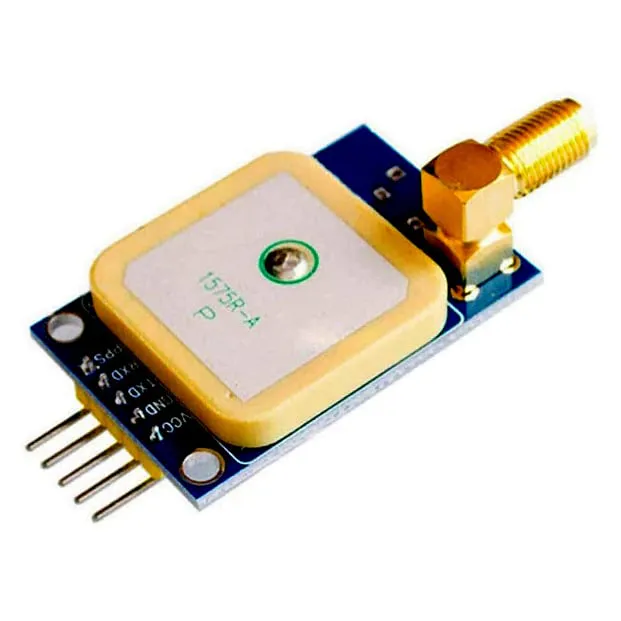
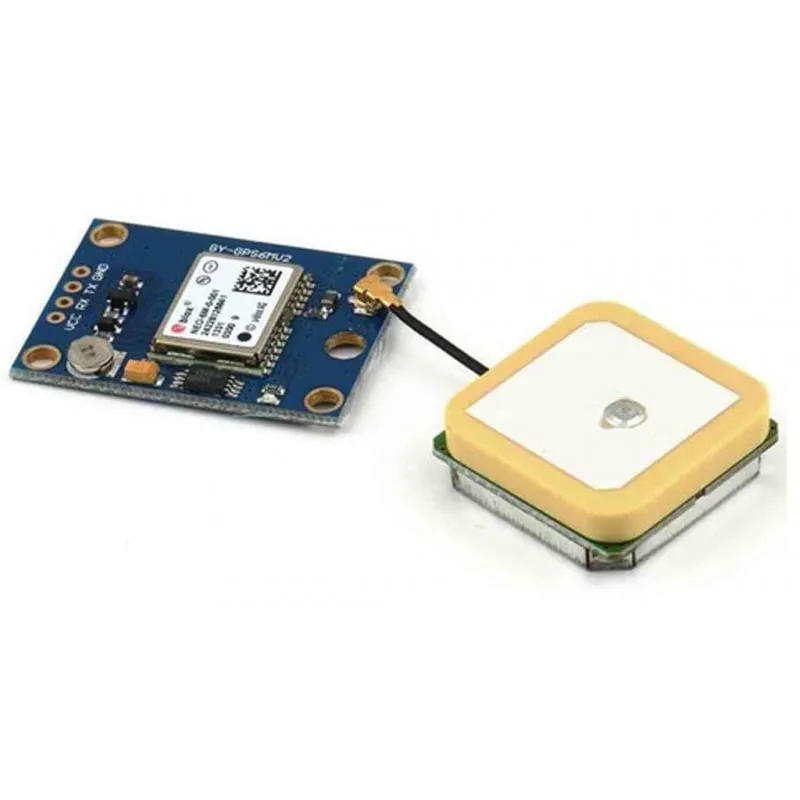
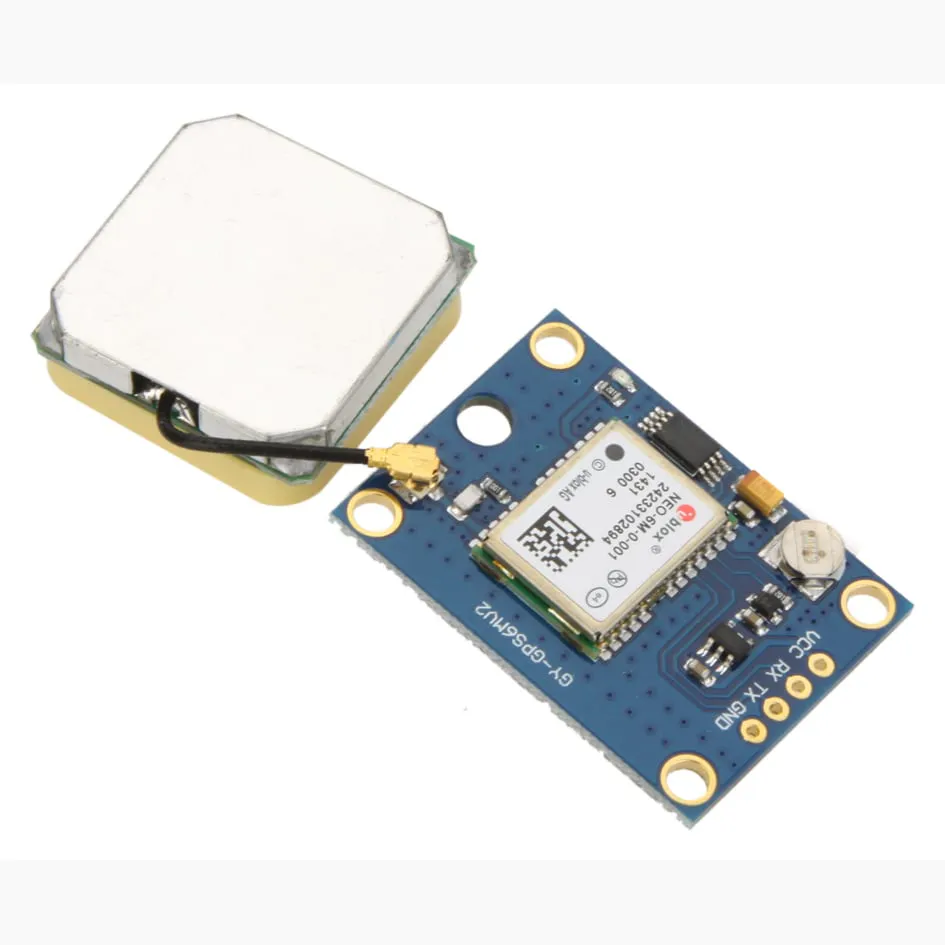
The u-blox NEO-6M GPS Module with EEPROM is a compact satellite positioning module targeted at UAV and FPV drone builders who need reliable real-time location, satellite data retention, and sensor compatibility. It suits builds from micros up to long-ranges where standalone GPS is required—for marking home point, returning to launch (RTL), or telemetry applications.
Built on the 50-channel u-blox 6 GNSS engine, supporting GPS L1 C/A code and SBAS (WAAS, EGNOS, MSAS) for improved accuracy.
Position accuracy: ~2.5 m CEP in open sky, ~2.0 m when SBAS corrections are available.
Fast start-up: Cold start ≈27 s, warm start ≈27 s, hot start ≈1 s. Supports aided start in under 3 s.
Low-signal sensitivity: tracking mode down to −161 dBm; cold start ≈−147 dBm; hot start ≈−156 dBm.
Flexible interfaces: UART (default 9600 baud), USB, SPI and I²C (DDC) supported; NMEA, UBX binary and RTCM protocols.
Built-in EEPROM and backup battery. Saves configuration and keeps ephemeris data during power-off for faster warm/hot starts.
Brand: u-blox
GNSS Chipset: u-blox 6 (NEO-6M)
Input Voltage: 2.7-3.6 V at chip level; module level may accept up to 5 V if voltage regulator onboard.
Logic Level: 3.3 V TTL for RX/TX (TX is 3.3 V; RX must not be fed above ~3.6 V)
Position Accuracy: ~2.5 m CEP (Autonomous), ~2.0 m with SBAS
Update Rate: default 1 Hz, configurable up to 5 Hz via UBX or NMEA
Sensitivity (tracking): ~−161 dBm
Acquisition Times: Cold start ~27 s, hot start ~1 s
Operating Temperature: −40 °C to +85 °C
Dimensions: 16.0 × 12.2 × 2.4 mm module package
This GPS module integrates easily into most flight controllers via UART and Common GNSS ports; ensure the module’s logic pins match your FC’s levels (3.3 V). Use the EEPROM to store UBX configuration so settings persist across power cycles. For drone builds where weight is critical, note that this module is relatively small and light. It excels in FPV long-range, mapping, agriculture drones, and builds needing RTL/home awareness; it’s less beneficial indoors or under heavy canopy where GPS signal loss is inevitable.
Related